

Understanding OzWin: Features, Uses & Benefits
Explore OzWin's features, practical uses, and benefits 🌏. Learn how to set it up and optimise performance in various fields with expert tips 📈.
Edited By
Liam Cartwright
OzWin is a software tool tailored for geospatial data analysis and mapping, widely adopted by professionals in Australia's mining and environmental sectors. It offers a practical solution for managing spatial information, aiding decision-making processes with accurate visualisation and analysis.
The software handles a variety of data formats, enabling users to overlay geological, environmental, and infrastructure data seamlessly. This capability makes it especially useful for mining operations needing to assess land conditions, plan extraction activities, or monitor environmental impact.

A standout feature of OzWin is its ability to present complex datasets through intuitive maps and charts, which helps teams spot trends and potential issues quickly. For example, environmental consultants use it to map pollution spread over time, providing clients with clear visual reports.
Tip: To get the most out of OzWin, ensure your datasets are clean and well-organised before importing. This avoids common pitfalls like misaligned layers or inaccurate analysis results.
System requirements are modest; it runs smoothly on standard workstations common in Australian offices, needing only a stable Windows environment and adequate hard disk space. This accessibility helps smaller businesses and regional offices adopt the software without needing costly hardware upgrades.
Whether you're a mining engineer plotting drill sites or an environmental scientist tracking river health, OzWin offers practical tools that fit well into daily workflows. It’s not overloaded with unnecessary bells and whistles, focusing instead on reliability and clear outcomes.
In short, OzWin is a dependable choice for geospatial tasks that demand precision and clarity, supporting projects from groundwork to reporting. It's worth getting familiar with its core functions before tackling more complex projects to harness its full potential.
Understanding what OzWin is and its intended purpose is key to appreciating how it fits into various professional settings, especially those dealing with geospatial data. OzWin is designed to provide clear, practical tools for spatial analysis and mapping, which helps users make informed decisions based on geographic and environmental data. When working in industries where location data plays a central role, such as mining or environmental management, knowing the strengths and scope of OzWin saves time and resources.
OzWin is a geospatial software application tailored for handling mapping and analysis of spatial data. It brings together various tools that enable users to visualise geographic features, analyse environmental changes, and manage large datasets with ease. This software runs efficiently on Windows systems and supports an array of spatial formats, making it handy for day-to-day operations or deep-dive investigations.
The software's interface balances functionality with straightforwardness, allowing users to dig into their data without being overwhelmed by complexity. For example, a land surveyor could use OzWin to overlay recent satellite imagery over field data to pinpoint changes in terrain or vegetation.
OzWin finds its niche primarily in the mining sector, environmental science, and land management agencies. In mining, it aids exploration teams with mapping mineral resources and planning their fieldwork efficiently. Environmental groups use it to track land use or habitat shifts over time, informing conservation strategies.
Professionals such as GIS specialists, environmental consultants, and surveyors are everyday users of OzWin. The adaptable nature of the software means it also serves educational institutions teaching geospatial analysis and local government departments responsible for planning and infrastructure development.
One of the main advantages OzWin offers is its ability to integrate various data types seamlessly. Users appreciate the capability to merge different datasets—like topographic maps with real-time sensor data—to get a fuller picture of the landscape.
Moreover, its flexible visualisation options help create clear, customised maps that can be directly used in reports or presentations. This reduces the need for multiple software tools, streamlining workflows considerably. An environmental consultant, for instance, can create detailed impact assessments more quickly, translating into faster project approvals.
OzWin lets professionals turn complex geospatial data into actionable insights without unnecessary fuss, making it a solid choice for those who value efficiency and practical results.
The practical benefits of OzWin also include ongoing support from a community of users and developers, making troubleshooting and learning more accessible. This support is invaluable for organisations that cannot afford downtime due to steep learning curves or technical glitches.
OzWin’s core features equip users with all the tools necessary for effective geospatial analysis, making it invaluable for industries like mining, environmental monitoring, and urban planning. These features are designed to streamline complex data handling and visualisation processes, ensuring that users can make informed decisions based on accurate spatial insights.
OzWin supports a variety of map types including topographic, thematic, and satellite imagery maps. This range allows users to select the most appropriate base map for their project, whether they’re pinpointing mineral deposits or monitoring vegetation changes. For example, a mining company might overlay geological maps with satellite images to identify promising exploration zones.
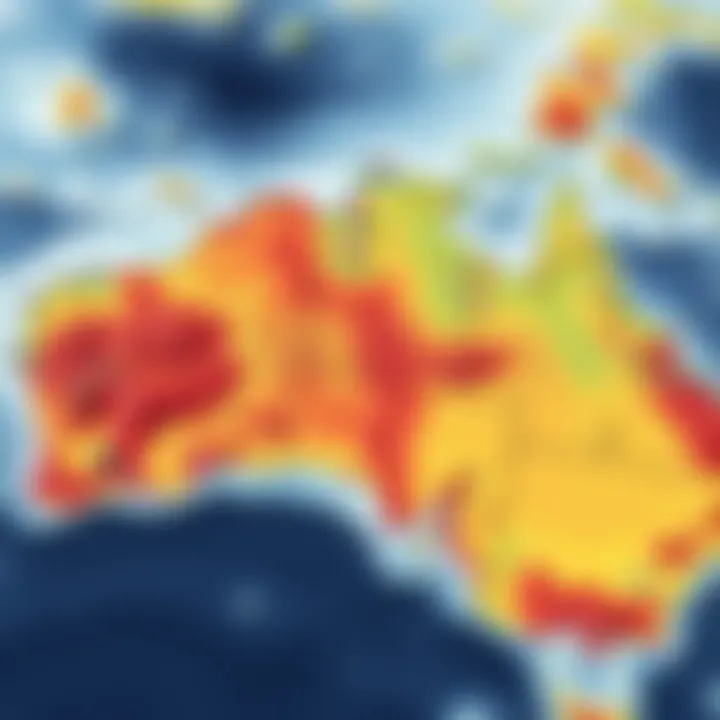
The software handles spatial data efficiently by supporting vector and raster formats, enabling users to work with points, lines, polygons, and grid-based data. Its spatial analysis capabilities include buffer zones, proximity calculations, and overlay functions. These tools let users perform detailed site analyses; such as determining how close infrastructure projects are to sensitive environmental areas, which is essential for compliance and risk assessment.
OzWin handles diverse data formats, including common ones like Shapefile (.shp), GeoTIFF, KML, and CSV. This versatility means data collected from various sources—GPS devices, drone surveys, or satellite data—is easily integrated into projects. For instance, environmental scientists can import CSV files of water quality readings while also incorporating spatial data layers for aquifers.
Importing data is straightforward, with options to organise datasets into manageable layers and folders within the project interface. This organisation helps users keep large or complex projects tidy and accessible. You can tag layers by date, source, or type, which simplifies navigation and future updates.
Visualisation customisation in OzWin is flexible, allowing users to adjust colours, symbols, and labels to best highlight key data points. This is handy when presenting to stakeholders who need clear, uncluttered maps. For example, a project team might highlight high-risk zones in bold red to immediately draw attention.
When it comes to exporting, OzWin offers multiple options including high-resolution images, PDFs, and GIS-compatible files. This ensures maps and reports can be easily shared or incorporated into larger documents. Users can export exactly what they need—be it full maps with legends or raw data tables—without unnecessary extras.
Efficient mapping and data handling through OzWin’s core features not only save time but also sharpen the quality of spatial analysis, making it an indispensable tool for professionals working with location-based data in Australia.
Getting off the ground with OzWin includes setting up your system correctly, knowing the installation process, and understanding the basic workflow. This ensures your use of the software is efficient and tailored to your project needs. Whether you’re new to geospatial software or transitioning from another tool, these steps offer practical guidance to get moving quickly.
OzWin isn’t overly demanding compared to some heavy geospatial programmes, but you’ll want at least a mid-range PC with 8GB of RAM and a modern processor—an Intel i5 or equivalent will do. It runs on Windows 10 or higher, so make sure your operating system is up to date. For smoother performance, especially when layering complex spatial data, having a dedicated graphics card helps.
These specs ensure the software does not lag or crash mid-analysis, which could throw off project timelines. Users on older machines may find OzWin sluggish, especially with large datasets common in mining or environmental projects.
Installing OzWin is a straightforward process. Once you’ve got your hardware sorted, download the installer from an authorised distributor or the official site. Follow the on-screen prompts, which usually involve selecting a directory and agreeing to the licence terms.
After installation, a quick system restart might be required. Then, launch the software and check for updates to get the latest features and patches. This upfront effort prevents compatibility issues and keeps the software running smoothly.
The first step when you open OzWin is creating a new project. This acts as a container for your data layers, analyses, and maps. Naming your project clearly and saving it in an organised folder structure pays off down the track.
For example, if you’re analysing land changes near the Great Barrier Reef, label the project accordingly. This way, when you revisit months later or hand over files to a colleague, it’s obvious what the project is about.
OzWin’s strength lies in handling multiple spatial layers—think satellite images, topographic maps, or cadastral data. Loading these correctly is essential. You’ll import data files in formats such as Shapefile, GeoTIFF, or CSV with geocoordinates.
Stacking layers allows you to see relationships, such as how a proposed mining lease overlaps with protected habitats. Being methodical in organising layers means your visualisations stay clean and your analyses stay on track.
Once your layers are set, running analyses is next. Common tasks include calculating land use changes, measuring distances, or identifying resource deposits. OzWin offers built-in tools that simplify these tasks, often with just a few clicks.
For instance, a mining company might analyse soil composition variation across a site to identify promising drill points. These insights turn complex data into actionable decisions, saving time and avoiding costly mistakes.
Starting OzWin with clear system setup and understanding the workflow helps you avoid headaches later. It’s not just about having the software but knowing how to use it properly from the get-go.
OzWin plays a significant role in Australia's mining and environmental sectors by offering tailored geospatial tools that meet local challenges. Its practical applications do not just enhance efficiency but also provide insights crucial for sustainable decision-making. By integrating OzWin, organisations can navigate the complexities of Australian terrains and regulations with greater accuracy and confidence.
Mapping mineral resources is fundamental to mining activities, and OzWin simplifies this by providing detailed spatial analysis that highlights key mineral deposits. Mining companies use the software to layer data like geological surveys, drill hole locations, and assay results, creating comprehensive maps. This visualisation aids in pinpointing promising sites and optimising resource extraction. For example, in WA’s Pilbara region, such maps can influence whether a site is viable or not, saving substantial costs in early-stage exploration.
Planning exploration activities relies heavily on accurate mapping and data collation. OzWin helps mining teams organise exploration schedules by integrating spatial data with environmental restrictions and access routes. This coordination means companies avoid unnecessary delays caused by non-compliance or difficult terrain. For smaller operators or contractors, the ability to visualise access and hazards on screen cuts down the guesswork and supports safer, better-informed fieldwork.
Analysing land use changes remains a pressing concern as urban expansion and agricultural activity reshape natural landscapes. OzWin supports agencies and researchers by tracking these changes through satellite images and historical data integration. This capability allows for clear identification of trends such as deforestation or wetland degradation. Queensland's local councils, for example, have used such analysis within OzWin to adjust zoning plans and protect vulnerable areas.
Supporting conservation efforts hinges on understanding habitats and ecosystems in detail. OzWin assists conservationists by processing spatial data on species distributions and habitat conditions, facilitating targeted interventions. The software's ease of generating maps showing protected zones or migration corridors means organisations can prioritize efforts and report outcomes more effectively. This is especially relevant in regions like Tasmania, where balancing forestry activities and conservation is crucial.
Practical use of OzWin in Australia combines geospatial insight with local knowledge, offering both mining players and environmental managers a tool that’s both flexible and dependable.
Through these applications, OzWin proves its worth not only as a technical asset but as a real-world solution tailored to Australian needs, helping users turn complex data into actionable plans.
When using OzWin, knowing how to troubleshoot common problems and where to find solid support can save you hours of frustration. This is especially important if you’re relying on OzWin in fast-paced environments like casinos or finance, where downtime can impact operations or decisions.
Handling crashes and errors: Software crashes or error messages can come out of the blue, derailing your workflow. OzWin sometimes trips up due to conflicting data layers or memory overload from handling large geospatial files. When a crash occurs, a good first step is to check if the software’s version matches your system requirements and ensure all updates are installed. Also, closing unnecessary background applications frees up memory, making it less likely for OzWin to bog down.
If an error message pops up, jot down the exact wording. For example, "Data format not supported" points to a different issue than a simple program freeze. These details help when searching official resources or asking for help, speeding up problem-solving.
Data compatibility problems: OzWin supports a range of data formats, but incompatible or corrupted files often cause frustration. An instance might be trying to load a shapefile exported from an outdated GIS system that OzWin can’t parse properly. When this happens, converting data to a standard format like GeoJSON or CSV can help. It’s also worth inspecting data for missing fields or incorrect coordinate systems, as these subtle mismatches can cause import failures.
Trying to merge datasets with differing projections is another common pitfall. OzWin users should be comfortable verifying and reprojecting data using built-in tools or external converters before import, ensuring smooth integration and analysis.
User manuals and tutorials: OzWin provides comprehensive manuals and step-by-step tutorials intended to get users familiar with the software quickly. These resources explain key functions like mapping, importing data, and customising outputs, which can be particularly handy if you’re onboarding new staff or need a quick refresher.
Having detailed documentation on hand means you can troubleshoot on your own before escalating issues. It’s smart to bookmark these guides or download PDFs for offline access, especially in fieldwork scenarios with limited internet connectivity.
Community forums and support channels: The OzWin user community is quite active, sharing tips, workarounds, and custom scripts that can enhance your experience. Forums function as a practical space to ask specific questions and receive answers from experienced users or developers.
Besides forums, official support channels like help desks or chat support provide direct access to technical help. When you’re facing complex challenges—say, a stubborn import error or performance issue—using these channels ensures you get tailored assistance without wasting time trialling fixes that don’t fit your situation.
Regularly updating your knowledge through manuals and leveraging community support can drastically reduce downtime and keep your OzWin workflows running smoothly.
Maintaining a proactive approach to troubleshooting—spotting and resolving issues quickly, and knowing where to find help—makes OzWin a reliable tool even in demanding, time-sensitive workplaces.
Explore OzWin's features, practical uses, and benefits 🌏. Learn how to set it up and optimise performance in various fields with expert tips 📈.

🎲 Discover everything about Ozwin Login Casino: smooth access, easy account setup, top games, great promos, secure payments, and handy tips for a seamless play.

🎰 Discover how to easily access your Ozwin Casino account, fix login issues, and boost your security for a smooth gaming experience every time. 🔐

Discover Ozwin Casino Australia 🇦🇺 with detailed reviews on games, bonuses, safe payment options, legal info, and expert tips for responsible play 🎲💳🔒
Based on 9 reviews